mass.report
Scan Intelligence Report0/100
low Risk
bitaccelerate.com
https://bitaccelerate.com
IP
104.21.67.7 · Cloudflare, Inc.
Location
Toronto, Canada
Domain Age
2846 days
HTTP
200 · 16.8s
SSL
Valid· WE1, Google Trust Services, US
Status
COMPLETED
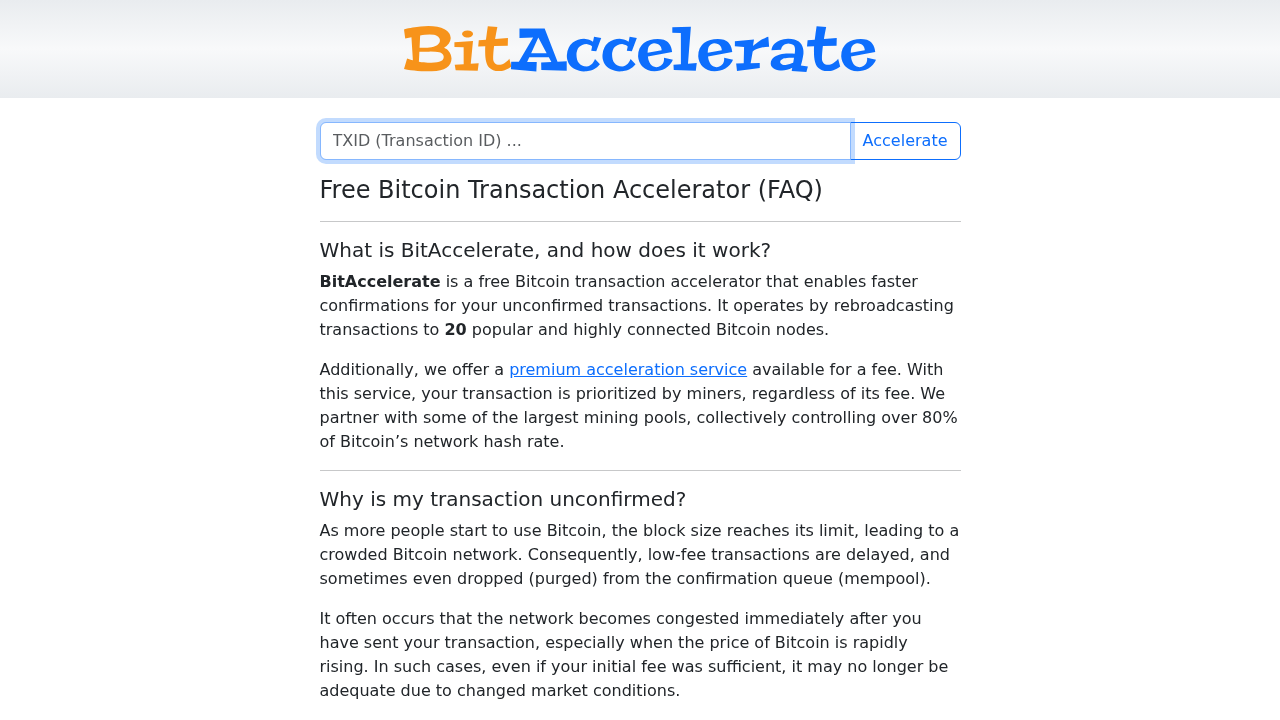
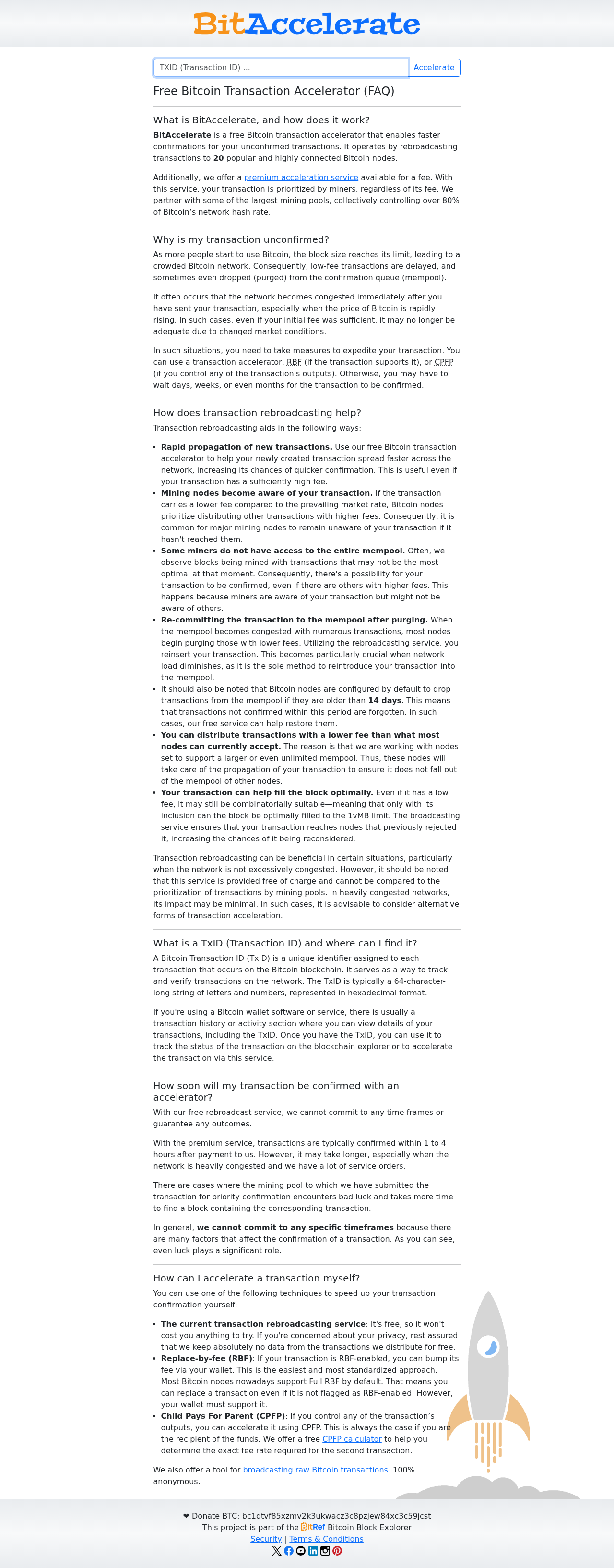
Domain Intelligence: bitaccelerate.com
Scanned 2 times since Jun 6, 2026, 11:20 PM UTC
ℹ Low (18)
KB/IOK Matches (0)—
No KB/IOK detections were recorded for this scan.
BitAccelerate
Unknowncryptocurrency | technology · 7/19/2026
Summary
The page presents BitAccelerate branding and a Bitcoin transaction accelerator offering. However, the page title explicitly impersonates a known regulatory/anti-fraud authority (ATO) in the domain intelligence signal, and the content includes impersonation cues by referencing ATO in the title while the domain is bitaccelerate.com. Network requests and embedded third-party scripts (Matomo, copypoison.js) plus a vague FAQ describe accelerator functionality. There is no direct credential harvesting UI detected in static HTML, but the presence of a login-like form without a clear login target and the impersonation signal raise risk of misrepresentation. Overall, evidence leans toward impersonation signals overlaying a legitimate-looking BitAccelerate site rather than a clear first-party abuse; the site itself markets a service rather than distributing malware, but impersonation risk warrants caution.
Evidence Summary
▸Observed 2 capture stage(s); canonical stage is settled_render.
▸POST targets observed during capture: https://uptimeradar.org/matomo.php?action_name=%231%20Free%20Bitcoin%20Transaction%20Accelerator%20%7C%20BitAccelerate&idsite=2&rec=1&r=411405&h=15&m=44&s=37&url=https%3A%2F%2Fbitaccelerate.com%2F&_id=5e84e21df622b61f&_idn=1&send_image=0&_refts=0&pv_id=6aZJIZ&pf_net=74&pf_srv=287&pf_tfr=2&pf_dm1=78&uadata=%7B%22formFactors%22%3A%5B%22Desktop%22%5D%2C%22fullVersionList%22%3A%5B%7B%22brand%22%3A%22Not%3AA-Brand%22%2C%22version%22%3A%2299.0.0.0%22%7D%2C%7B%22brand%22%3A%22HeadlessChrome%22%2C%22version%22%3A%22145.0.7632.6%22%7D%2C%7B%22brand%22%3A%22Chromium%22%2C%22version%22%3A%22145.0.7632.6%22%7D%5D%2C%22mobile%22%3Afalse%2C%22model%22%3A%22%22%2C%22platform%22%3A%22Windows%22%2C%22platformVersion%22%3A%2210.0%22%7D&cookie=1&res=1280x720.
▸Distinctive asset clues: scripts.js, bootstrap.bundle.min.js, bootstrap.min.css, style.css, bitaccelerate.svg, rocket.png.
Capture
Stages: 2
Canonical: Settled Render
Changed: No
Credential Signals
Forms: 1
Password fields: 0
Late-stage login UI: No
Resource Signals
Resources: 17
Hosts: 3
Domains: 3
Suspicious Endpoints
hxxps://bitaccelerate[.]com/
Observed Signals (1)
Brand impersonation risk detected via page title referencing ATO
Observed Indicators (1)
▸Impersonation signal in DOMAIN INTELLIGENCE suggesting reference to ATO in title
Risk AssessmentUsed in abuse reports
The page uses BitAccelerate branding to present a Bitcoin transaction accelerator, but domain intelligence flags impersonation risk due to the page title referencing ATO on a non-official domain. The site also loads external scripts from third-party domains and uses analytics in a manner common to many sites, including those attempting to evade detection. While there is no explicit credential collection form identified in static HTML, the impersonation signal combined with the suspicious off-domain script loading and the presence of a POST beacon to matomo with rich metadata suggest potential abuse or at minimum deceptive branding. Given the impersonation signal and external script loading from non-origin domains, this warrants monitoring and further verification; nothing conclusively proves phishing credential theft from this scan alone.
Recommended Action
Monitor
Cross-Reference8
URL Intelligence

Domain Intelligence



IP Intelligence

Public threat feed available — JSON API