mass.report
Scan Intelligence Report0/100
low Risk
uber.com
https://uber.com
IP
69.48.216.87 · Uber Technologies, Inc
Location
San Francisco, United States
Domain Age
11231 days
HTTP
200 · 36.0s
SSL
Valid· DigiCert Global G2 TLS RSA SHA256 2020 CA1, DigiCert Inc, US
Status
COMPLETED
KB/IOK Matches (0)—
No KB/IOK detections were recorded for this scan.
uber.com
Unknowntechnology | transportation | mobility | other · 7/19/2026
Summary
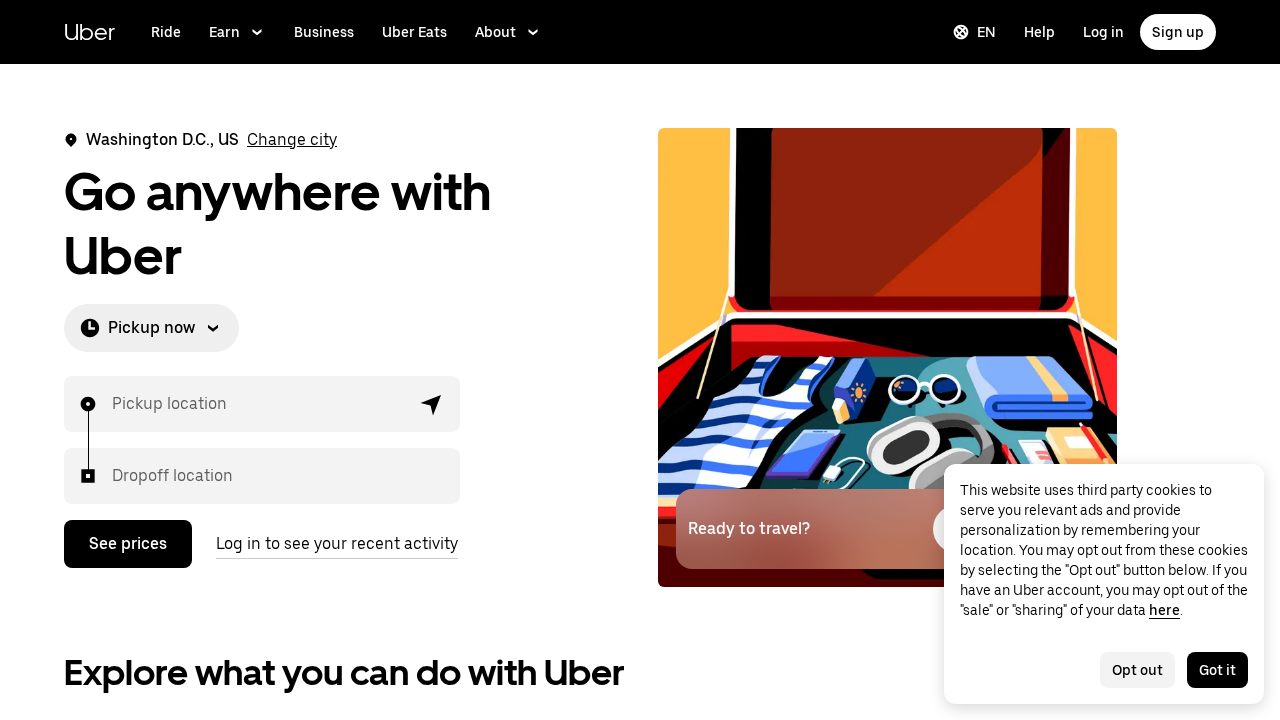
The page presents Uber branding on the official domain uber.com with Uber visuals and content. There is no clear credential harvesting or login form observed in the static HTML; however, the page loads a large set of third-party scripts and tracks user interactions via numerous POST endpoints to Uber APIs, which is expected for a first-party Uber interface. The evidence does not clearly indicate impersonation or phishing; the branding appears consistent with Uber's own site on its official domain, though the extensive external script usage and POST activity warrant normal security monitoring for data handling and privacy implications.
Evidence Summary
▸Observed 3 capture stage(s); canonical stage is late_render_3s.
▸POST targets observed during capture: https://www.uber.com/api/getCurrentUser?localeCode=en, https://www.uber.com/api/getProductSuggestions?localeCode=en, https://www.uber.com/api/getMapHeroEnabledProducts?localeCode=en.
▸Distinctive asset clues: client-2611-cea8fd9da8c4aa5f.js, client-5646-1e02200604102a9c.js, srcb64=aHR0cHM6Ly90Yi1zdGF0aWMudWJlci5jb20vcHJvZC91ZGFtLWFzc2V0cy9hM2NmODU2NC1lMmE2LTQxOGMtYjliMC02NWRkMjg1YzEwMGIuanBn, srcb64=aHR0cHM6Ly90Yi1zdGF0aWMudWJlci5jb20vcHJvZC91ZGFtLWFzc2V0cy83NmJhZjFlYS0zODVhLTQwOGMtODQ2Yi01OTIxMTA4NjE5NmMucG5n.
Capture
Stages: 3
Canonical: Late Render (+3s)
Changed: No
Credential Signals
Forms: 1
Password fields: 0
Late-stage login UI: No
Resource Signals
Resources: 215
Hosts: 7
Domains: 3
Suspicious Endpoints
hxxps://www[.]uber[.]com/api/getCurrentUser?localeCode=en
hxxps://www[.]uber[.]com/api/getProductSuggestions?localeCode=en
hxxps://www[.]uber[.]com/api/getMapHeroEnabledProducts?localeCode=en
hxxps://www[.]uber[.]com/api/getMerchandisingAdAvailability?localeCode=en
hxxps://www[.]uber[.]com/api/pudoLocationSearch?localeCode=en
hxxps://www[.]uber[.]com/api/getExperiments?localeCode=en
Observed Signals (0)
Observed Indicators (0)
No suspicious indicators identified
Risk AssessmentUsed in abuse reports
The scan indicates the site on its official domain Uber.com with legitimate Uber branding and typical analytics/telemetry endpoints. There is no evidence of credential harvesting UI or impersonation in the static content. However, the heavy use of external tracking scripts and frequent POST calls to account-related endpoints could raise privacy/telemetry concerns if data is mishandled. No action is warranted for phishing at this time; continue monitoring for unusual data exfiltration patterns or unexpected endpoint usage. If there is any doubt about the page rendering a credential form, it would require runtime analysis beyond static HTML to confirm.
Recommended Action
Monitor
Cross-Reference8
URL Intelligence

Domain Intelligence



IP Intelligence


Public threat feed available — JSON API